Demolition Contractor 101: Costs, Permits, and Safety Basics
Demolition is the quiet foundation under many successful building projects. Before a new home, addition, or commercial build can rise, something often has to come down. A good demolition contractor doesn't just swing heavy machinery; they navigate permitting, protect neighbors and workers, manage environmental risks, and leave a clean, safe site ready for the next phase. If you're new to demolition, here's what to know about costs, permits, and safety before you start.
What a demolition contractor actually does
- Plans the work: surveys the structure, reviews drawings, checks for load-bearing elements, and sequences the takedown to avoid collapses.
- Handles paperwork: obtains demolition permits, coordinates utility disconnects, files required environmental notifications, and, where needed, arranges traffic control.
- Manages hazards: identifies and abates asbestos, lead, mold, or other contaminants; locates underground tanks or septic systems; protects trees and storm drains.
- Performs demolition: uses equipment and hand labor to selectively remove materials or bring down full structures, while controlling dust, vibration, and noise.
- Disposes and recycles: separates metals, concrete, wood, and fixtures; hauls debris to approved facilities; documents recycling rates and disposal.
- Delivers a clean site: backfills, grades, compacts, and installs erosion controls so the next contractor can mobilize.
Costs: what drives the price
Every demo is unique, but most quotes roll up the same building blocks: mobilization, equipment, labor, disposal fees, permits, environmental surveys or abatement, and site restoration. Expect wide variation by location, access, and materials. Typical ranges in many US markets:
- Interior/selective demolition (non-structural): about $2 to $7 per square foot, higher if materials are stubborn (tile on mud bed), in tight spaces, or if work must be done by hand.
- Full house (wood-frame) demolition: roughly $8,000 to $30,000 for a 1,000–2,000 sq ft home, plus $5,000 to $15,000 if removing the foundation and grading the lot.
- Small commercial or concrete-heavy structures: commonly $4 to $12 per square foot, more with thick slabs, structural steel, or limited access.
- Hazardous materials abatement (if needed): asbestos surveys often $300 to $1,500; abatement can add $3 to $15 per square foot depending on materials; lead-safe practices can add 10–20% to interior jobs.
- Permits and utility work: demo permits can range from under $100 to several thousand dollars; utility disconnects and “cut and cap” fees often total $1,000 to $5,000.
- Disposal and recycling: tipping fees vary dramatically by region; separating metal and clean concrete can reduce costs and even generate credits.
Demolition Geelong .
Other line items that can move the needle:
- Access limits that prevent large equipment
- Need for shoring or engineered bracing between attached structures or party walls
- Rodent abatement requirements in some cities
- Tree removal or protection
- Traffic control or right-of-way permits for dumpsters and street closures
- Soil import/export, compaction testing, and erosion control after demo
- Discovery of surprises: old oil tanks, hidden masonry, or unpermitted additions
Permits and paperwork you'll likely need
Rules vary by city and country, so always confirm locally, but expect some combination of:
- Demolition permit from the building department, often requiring a site plan and proof of contractor license and insurance.
- Utility disconnect letters: gas, electric, water, sewer, telecom. In the US, call 811 before any digging; many jurisdictions require lines to be located and capped.
- Environmental survey: asbestos and sometimes lead paint surveys are required before disturbance; many places require notification to the air quality agency (for example, NESHAP in the US) several business days before demolition begins.
- Erosion and sediment control plan and tree protection if disturbing soil.
- Right-of-way or sidewalk permits for staging, fencing, or dumpsters.
- Historic or preservation review if the structure is in a protected district.
- Rodent abatement certificate in some cities before issuing the permit.
- Demolition bonds or proof of funds in select jurisdictions.
A competent contractor will tell you which apply, include them in the schedule, and often pull the permits on your behalf.
Safety basics that aren't optional
Demolition safety is about controlling change. Stability can shift in seconds, so pros lean on preparation and predictable sequences.
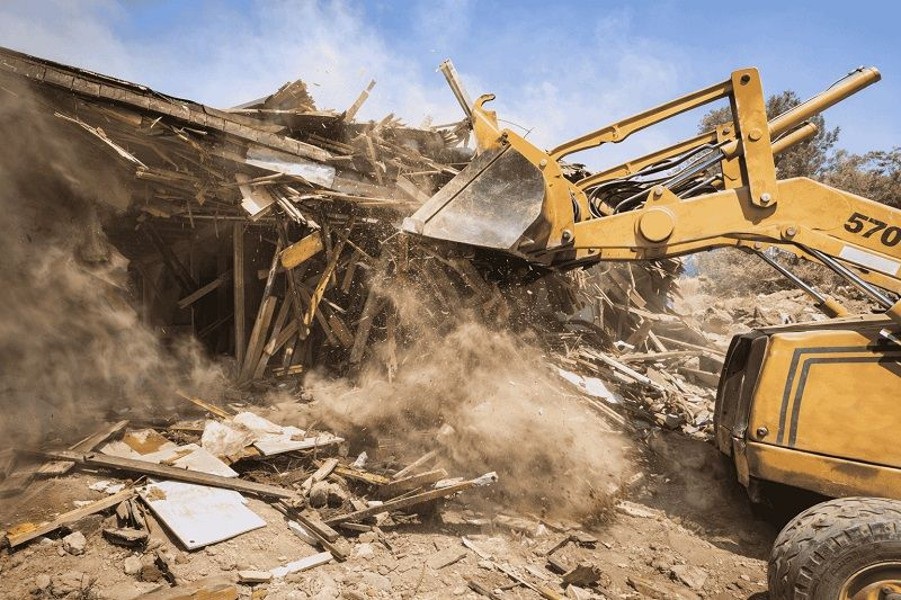
- Pre-demolition survey: identify load paths, post-tensioned slabs, bearing walls, and compromised elements. Plan the takedown top-down, outside-in, and never undercut supports.
- Hazardous materials: test and abate asbestos, lead, and other contaminants before disturbance; follow legal work practices and disposal rules.
- Utilities: verify all utilities are shut off, capped, and tagged. Lockout/tagout procedures matter; don't rely on assumptions.
- Exclusion zones: fence or tape off danger areas; use spotters, signage, and flaggers to keep people out of swing and fall zones.
- Dust and noise control: use water mist for dust (silica is a health hazard), avoid uncontrolled debris drops, and comply with local noise ordinances and work hours.
- Fall protection and shoring: protect openings, brace adjacent walls, and never overload floors with debris.
- Equipment and communication: trained operators, radio or hand signals, and a clear stop-work authority for anyone who sees an issue.
- Fire and environmental protection: remove fuel sources, manage hot work, keep extinguishers handy, protect storm drains, and contain runoff.
- Weather and vibration: monitor wind for dust control and crane work; track vibration near neighbors and historic structures.
The demolition process, step by step
1) Due diligence: site visit, surveys, environmental testing, and utility locates.
2) Permitting and notifications: submit demo permit and any required environmental notices; schedule utility cut-and-caps.
3) Pre-mobilization: install fencing, tree and silt protection, and staging areas; arrange dumpsters and traffic control.
4) Soft strip and salvage: remove fixtures, appliances, doors, and valuable millwork; separate metals and clean concrete to reduce disposal costs.
5) Structural demolition: proceed in a planned sequence, with dust suppression and constant stability checks.
6) Debris management: load-out, recycling, and disposal with weigh tickets and manifests.
7) Site restoration: remove foundations if in scope, backfill and compact, rough grade, and install erosion controls.
8) Closeout: inspections as required, final sweep for nails and hazards, and handoff of permits, receipts, and recycling reports.
How to hire the right demolition contractor
- Verify licensing, insurance (general liability, workers' comp, and pollution liability), and bonding if required.
- Ask for a detailed, written scope: what's included and excluded, handling of permits and utilities, abatement approach, disposal destinations, and site restoration specifics.
- Compare apples to apples: unusually low bids often skip permits, abatement, or proper disposal. Ask about tipping fees, recycling rates, and change-order policies.
- Check experience and references, especially for tight sites, attached buildings, or specialized materials.
- Clarify schedule and payment terms: modest deposit after permits are issued, progress payments tied to milestones, and lien releases with each payment.
Neighbor and community considerations
Give neighbors a heads-up, share the schedule, and provide a contact for issues. Protect adjoining structures and shared elements, keep streets clean, and follow noise/work-hour limits. Some cities require formal notifications; even when they don't, good communication prevents complaints and delays.
When deconstruction makes sense
Full mechanical demo is fast, but selective deconstruction can salvage brick, old-growth lumber, cabinets, and fixtures. This can reduce waste, earn tax deductions through qualified donations, and preserve character pieces-though it takes longer and may cost more up front.
A quick homeowner checklist
- Get an asbestos/lead survey and plan abatement if needed.
- Confirm utility disconnects in writing before demo day.
- Make sure permits and required notifications are in hand.
- Agree on dust, debris, and neighbor protection measures.
- Lock down scope, disposal plan, and site restoration in the contract.
- Keep kids, pets, and curious onlookers out of the work zone.
The bottom line
Demolition is as much about planning and compliance as it is about tearing things down. The right contractor will help you anticipate costs, pull the right permits, and run a safe, orderly job that clears the way for what comes next. If you invest a little time in due diligence up front-scoping, surveys, and permits-you'll save money, reduce risk, and start your new build on solid ground.